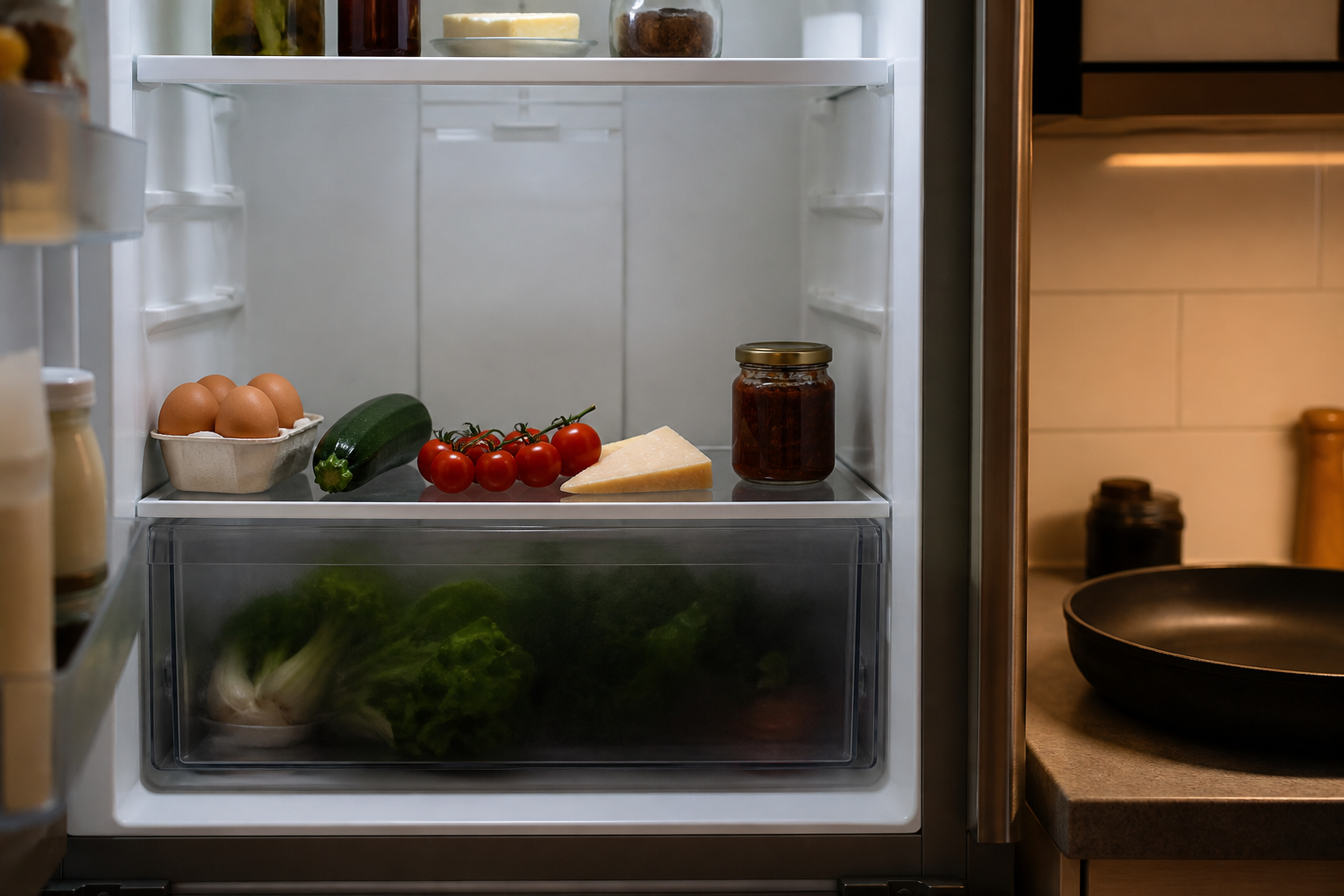
A photo of your fridge can help you choose dinner tonight if you treat it as an inventory draft, not a complete answer. Identify the ingredients you can see, verify their names, quantities and condition, then build one meal around a main ingredient, a supporting vegetable, a filling base and a flavour direction. Pick a cooking method that fits your time and equipment. Before cooking, check hidden essentials such as oil, seasoning and allergens. If the photo is unclear, ask for confirmation rather than guessing.
The quickest practical route is usually a flexible format rather than a tightly specified recipe: a pan meal, omelette, grain bowl, pasta, soup or tray bake. Choose the format that uses the most perishable verified items without requiring several missing ingredients. The goal is not to use everything. It is to make one coherent dinner with the fewest uncertain assumptions.
The FRAME photo-to-dinner method
Use this five-part framework whenever a fridge image gives you possibilities but not certainty.
1. Focus the image
Start with evidence quality. Open the fridge fully, switch on the interior light and take a straight-on photograph. Move only what is necessary to reveal labels; do not arrange the shelves to imply quantities that are not there. If door shelves, drawers or leftovers matter, photograph them separately. A single wide image may show that a container exists without showing what is inside it.
A useful photo should let you distinguish an ingredient from its packaging and estimate whether there is enough for the intended number of servings. It still cannot establish freshness, storage history or an ingredient list. Those checks happen in person.
2. Record three inventory states
Transcribe the image into three columns:
- Confirmed: the ingredient and usable amount are clear enough to verify by hand.
- Possible: an item appears visible, but its identity, amount or condition is uncertain.
- Missing or off-camera: pantry staples, freezer items and seasonings that the image cannot confirm.
Use confirmed items to choose the dinner. Treat possible items as questions, not ingredients. This prevents a pale jar from silently becoming yoghurt, mayonnaise or sauce in the plan.
3. Assemble a meal structure
Give each confirmed ingredient a job. A dependable structure is:
- Anchor: the ingredient that defines the dish, such as eggs, tofu, cooked beans, fish or chicken.
- Produce: one or two vegetables or fruits that make sense with the anchor.
- Base: bread, rice, pasta, potatoes, noodles or another filling component, if wanted.
- Bridge: a flavour combination that makes the parts belong together, such as tomato and herbs, soy and ginger, or lemon and pepper.
- Method: pan, oven, microwave or no-cook assembly.
Not every dinner needs all five parts. The structure is a diagnostic tool: it shows what is missing before you begin.
4. Match gaps to substitutions
A substitution should preserve the missing ingredient's role, not merely resemble it. If a recipe calls for spinach because it wilts quickly, thinly sliced courgette may be a better practical swap than a firm vegetable that needs a long cook. If yoghurt provides creaminess and acidity, a replacement must address both roles—or the result should be described differently.
Before accepting a swap, ask:
- Does it cook in roughly the same stage of the method?
- Does it add moisture, structure, richness, acidity or seasoning?
- Will changing it affect an allergy or dietary constraint?
- Does the visible quantity cover the planned servings?
5. Execute only after review
Read the entire method, put the verified ingredients on the counter and confirm the missing staples. Check package labels, use-by information, storage condition and allergens yourself. Decide the number of servings before estimating nutrition. If an ingredient remains unidentified or questionable, leave it out and choose a simpler structure.
Example: a one-person courgette, tomato and egg skillet
This is an illustrative editorial example, not the result of an observed Chef Bento session and not evidence that image recognition identified these items. Assume a staged fridge photo appears to show six eggs in a carton, one courgette, several cherry tomatoes, a small piece of hard cheese and an unlabelled jar. A person standing at the fridge confirms that two eggs, half the courgette, six tomatoes and a small grating of cheese are available and suitable to use. The jar stays in the “possible” column and is excluded.
The decision trace looks like this:
- Anchor: two eggs.
- Produce: courgette and tomatoes.
- Base: none required for this example; bread can be served alongside only if verified separately.
- Bridge: cheese plus pantry seasoning, after those are checked.
- Method: one covered frying pan.
Why this meal? The eggs can bind the vegetables into one serving, the vegetables suit the same pan, and the method does not depend on the unidentified jar. It also avoids assuming that rice, pasta or another off-camera base is available.
Method
- Wash the confirmed vegetables. Slice half a courgette thinly and halve six cherry tomatoes.
- Crack two eggs into a bowl. Check that the cheese and any intended seasoning are suitable for the eater, then whisk in the grated cheese. If no cheese is available, continue without it and season to taste.
- Heat a frying pan using an appropriate amount of a verified cooking fat. Cook the courgette until it reaches the texture you prefer.
- Add the tomatoes briefly, keeping their liquid in the pan.
- Pour in the egg mixture. Reduce the heat, cover and cook until the egg is set to your preference. Follow any local food-safety advice relevant to eggs and the people eating them.
- Taste only when safe to do so, adjust verified seasoning and serve.
Two role-based substitutions
- If the courgette is not usable but confirmed mushrooms are available, slice them and cook them until their released moisture no longer makes the pan watery before adding the tomatoes. This preserves the quick-cooking vegetable role but changes the timing.
- If cheese is unavailable, omit it rather than replacing it blindly. The eggs still provide structure. A verified spoonful of plain yoghurt could be served alongside for creaminess, but it should not be assumed from an unlabelled tub and may not suit every diet.
No macro number is presented here because the ingredient weights, brands, cooking fat and final serving were not measured, and no real product output was supplied for verification. To obtain a meaningful estimate, record the actual amounts used—including oil and optional bread—and keep the serving count fixed at one.
Decision table: choose the format before the recipe
| What the verified photo inventory contains | Best first format to consider | Check before committing | Avoid assuming |
|---|---|---|---|
| Eggs plus quick-cooking vegetables | Omelette, scramble or covered skillet | Enough eggs for the serving count; suitable cooking fat | That every tub is cheese or dairy |
| Cooked beans plus vegetables | Warm bean pan, soup or bowl | Whether the beans are already cooked; available liquid or dressing | That an unlabelled container is stock |
| Cooked rice plus protein and vegetables | Fried rice or reheated bowl | Storage history and safe reheating; seasoning | That the rice is suitable because it looks normal |
| Pasta plus one vegetable and a flavour bridge | Pasta with a simple pan sauce | Pantry pasta amount; sauce moisture; cooking water | That a jar contains the expected sauce |
| Several vegetables but no clear anchor | Soup, tray bake or side dish with a separately verified anchor | Oven access, stock or water, and serving needs | That vegetables alone will meet every eater's needs |
| Leftover cooked food in a container | Reworked bowl, soup or pan meal | Identity, date, storage and reheating requirements | That appearance proves freshness or safety |
When two formats fit, choose the one with fewer dependencies. A skillet needing eggs and oil is more robust than a bake that also requires breadcrumbs, a particular dish and a long oven session—unless those are all confirmed.
Implementation checklist for tonight
- Set the constraint. Write down the number of diners, available time, equipment and any dietary or allergy requirements.
- Take useful images. Capture the main shelves, then any relevant door shelf or drawer. Keep labels readable where possible.
- Transcribe before interpreting. List only what you can see. Do not convert “green leaves” into “spinach” until someone verifies them.
- Confirm by hand. Check identity, amount, condition, packaging instructions and whether each item is appropriate for everyone eating.
- Select one anchor. Choose the ingredient that will define the meal and establish the serving count.
- Add one or two supporting items. Prefer ingredients that share a cooking method and flavour direction.
- Audit hidden requirements. Verify oil, water, seasoning, pans, power and any pantry or freezer item the method needs.
- Choose substitutions by function. Preserve the missing ingredient's job, then adjust timing and moisture.
- Write the short method. Keep it to a sequence you can scan while cooking. Include amounts wherever you know them.
- Estimate only from actual use. Nutrition estimates should reflect measured amounts, brands where relevant, cooking fats and the real serving count.
- Save the decision, not just the dish. Note which uncertain item caused trouble so the next photo can reveal it more clearly.
If you want to try the site's photo-meal workflow, the verified public pricing page says Chef Bento can turn a fridge photo into a meal, adapt recipes to available ingredients and provide macros. You can review Eat Easier Club access options before deciding whether that workflow suits you. Always verify the generated inventory and instructions against the food in front of you.
Limitations
A photograph is incomplete evidence. It may hide items behind containers, distort colour, crop labels and provide no reliable account of quantity, freshness, storage temperature or how long leftovers have been kept. It also cannot reveal every ingredient in a prepared food or rule out allergens and cross-contact.
A meal suggestion can be internally coherent and still be wrong for the person cooking. Equipment, skill, dietary needs, local food-safety guidance and the actual condition of the ingredients all matter. Treat recognition as a draft for confirmation, not permission to eat an item.
Nutrition values are estimates, not direct measurements of the plated meal. Brands, drained weights, cooking fats, substitutions and serving size can materially change the result. Keep the inputs explicit and avoid false precision.
Finally, the worked example above is deliberately transparent: no original fridge photograph, preserved product output or measured macro result was supplied with the editorial materials. It demonstrates the decision process without pretending that a product test occurred. A future documented example should preserve the original image, the confirmed transcription, the unedited output, the exact substitutions and the measured quantities.
FAQ
Can one fridge photo show everything needed for dinner?
Usually not. It may help establish a starting inventory, but pantry items, freezer food, door shelves, quantities and labels can be missing. Use additional images or a short written note, then verify each essential item in person.
What should I include with the photo?
Add the number of servings, time available, dietary or allergy requirements, equipment limits and any ingredients that must be used soon. Mention verified pantry staples rather than expecting the image to imply them.
What if the suggested meal uses an ingredient I do not have?
Identify that ingredient's role. Replace it with a verified item that performs the same job and adjust the method, or choose a simpler meal format. Do not use an uncertain container merely because it resembles the missing item.
Should I try to use every visible ingredient?
No. A focused dinner is often easier to execute than a “use everything” recipe. Prioritise a coherent meal, ingredients you have verified and items you intend to use, while leaving incompatible ingredients for another meal.
Can a photo confirm that leftovers are safe?
No. Appearance alone cannot establish identity or storage history. Check your own records, packaging and applicable local guidance. If you cannot resolve uncertainty, do not build the meal around that item.
How should I handle macro estimates?
Use the actual amounts cooked, include oils and toppings, specify the serving count and keep substitutions visible in the record. Treat the result as an estimate. Do not copy a value from a similar-looking meal and present it as the value for yours.
What makes a fridge-photo prompt more useful?
Ask for one meal, not a broad list. State your constraints, request that uncertain ingredients be flagged, require substitutions to be explained by function and ask for a final checklist of anything that still needs confirmation. That turns the output into a decision you can inspect rather than a recipe you must trust blindly.